
What is Tape as a Service? Is it worth using magnetic tapes?
Cybersecurity is becoming an increasingly significant challenge for many companies, while the risk of data loss due to a hacker attack, hardware failure,…
Cybersecurity is becoming an increasingly significant challenge for many companies, while the risk of data loss due to a hacker attack, hardware failure, or malware infection is a real threat. As a result, the need to create backups is growing. The main principle of backup creation assumes that data should be stored in at least three locations and on two storage media located in different locations. So how can you prepare reliable backups? A good solution is offline backup, which can be performed using magnetic tapes supported by Tape as a Service (tape storage). This is a modern standard in tape storage that combines high data storage capacity with long-term durability and reliability. What else is worth knowing about LTO tapes? What are their advantages?
What are LTO tapes?
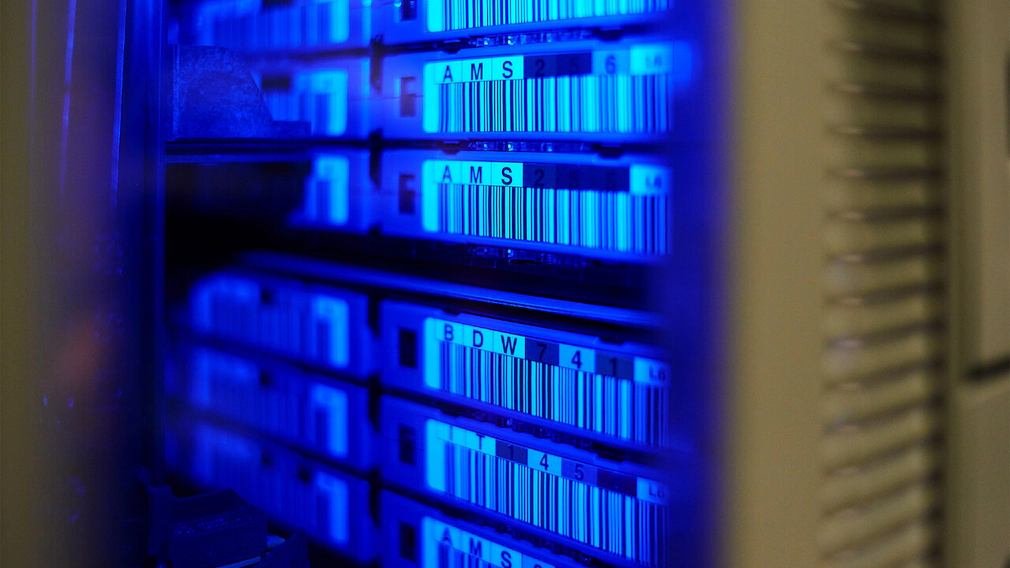
Although storing data on tapes may remind us of a bygone era, the increasing number of hacker attacks is forcing companies to keep data on external storage media in an offline format. Fortunately, today’s LTO tapes have little in common with the slow solutions of the previous decade. Their latest generation provides high capacity, fast transfer speeds, and reliable recording.
How does tape backup work? In short, the data intended for storage is compressed and then placed on a physical tape containing a magnetized layer of particles. This makes it possible to store large amounts of data at a low cost, especially data that the company does not need to access constantly, such as archived data.
Tape storage offers significant capacity. Modern LTO tapes can store multiple terabytes of data, making them particularly attractive to many businesses with large amounts of data. Their durability is significantly greater than that of traditional hard drives, and data stored on LTO tapes can last for several decades without significant loss of quality.
Advantages of magnetic tapes
Although a physical storage medium can be stolen or damaged, LTO tapes still offer many benefits that no online data storage method can match.
First of all, physical tape is one of the most effective ways to protect data against hacker attacks. Files stored on tape are not accessible over the network, so hackers cannot gain access to them or infect them with malware. What’s more, the data is encrypted, meaning it can only be read by authorized individuals who have the necessary decryption credentials.
Secondly, LTO tapes are easy to transport, which means that in the event of a threat (such as the risk of fire or flooding), they can quickly be moved to another location.
Another advantage is their relatively low cost. The cost of producing tapes has been falling for years, while their capacity, speed, and overall performance have continued to improve. As a result, tapes offer high capacity while taking up very little space. They also do not require a power supply or consume electricity – they are fully designed for offline operation.
If necessary, files stored on tapes can be quickly restored, and the data retention period can be as long as 30 years. What’s more, data from tapes can also be quickly transferred to other storage media. It is also worth noting the ability to become independent of a service provider and manage data entirely on your own.
All of this makes LTO tapes an excellent way to create backups and protect large amounts of data, and something every company should consider.
What is Tape as a Service?
Although tape storage is certainly a good method for storing important and necessary backups, the cost of preparing them can turn out to be significantly higher than it might seem at first glance.
The cost of such a solution is, of course, not limited to the tapes themselves. The company must also invest in a tape drive and automation, such as a tape library. Additional costs include servicing, maintenance, and long-term storage of the media in secure conditions. Building such infrastructure and storing magnetic tapes independently is a significant investment, which often leads companies to ultimately abandon the use of tapes.
Fortunately, there is already an answer to these challenges – Tape as a Service. It involves a provider making a tape library or a section of tape libraries available as a cloud service. The company does not have to purchase or manage a tape library itself, but can rent exactly as much capacity as it needs. This allows it to significantly reduce the costs of creating LTO tapes and use them without worrying about infrastructure or budget.
What is tape storage?
So, what exactly is tape storage (Tape as a Service)? At Cloud4You, we have been creating backups and providing LTO tapes for many years. As a provider, we record data onto tapes and then store and manage them. At the customer’s request, we can also transport the tapes and deliver them to a specified location. In addition to the Tape as a Service model, which is based on a monthly subscription, we also offer Tape on Demand, which involves creating a backup as a one-time service.
When it comes to storing and transporting tapes, we pay particular attention to security. Properly handled tapes can provide reliable service for several decades. Unfortunately, we know that storage media can easily be damaged when transported manually or shipped without adequate protection. That is why we use specialized transport containers to ensure that the tapes safely reach their destination.
If you are looking for an LTO tape provider or tape storage service, contact us. With our support, you can effectively protect your data using tape storage and easily manage it through a simple-to-use application. We also provide support from a dedicated account manager who answers questions and helps at every stage of implementation.